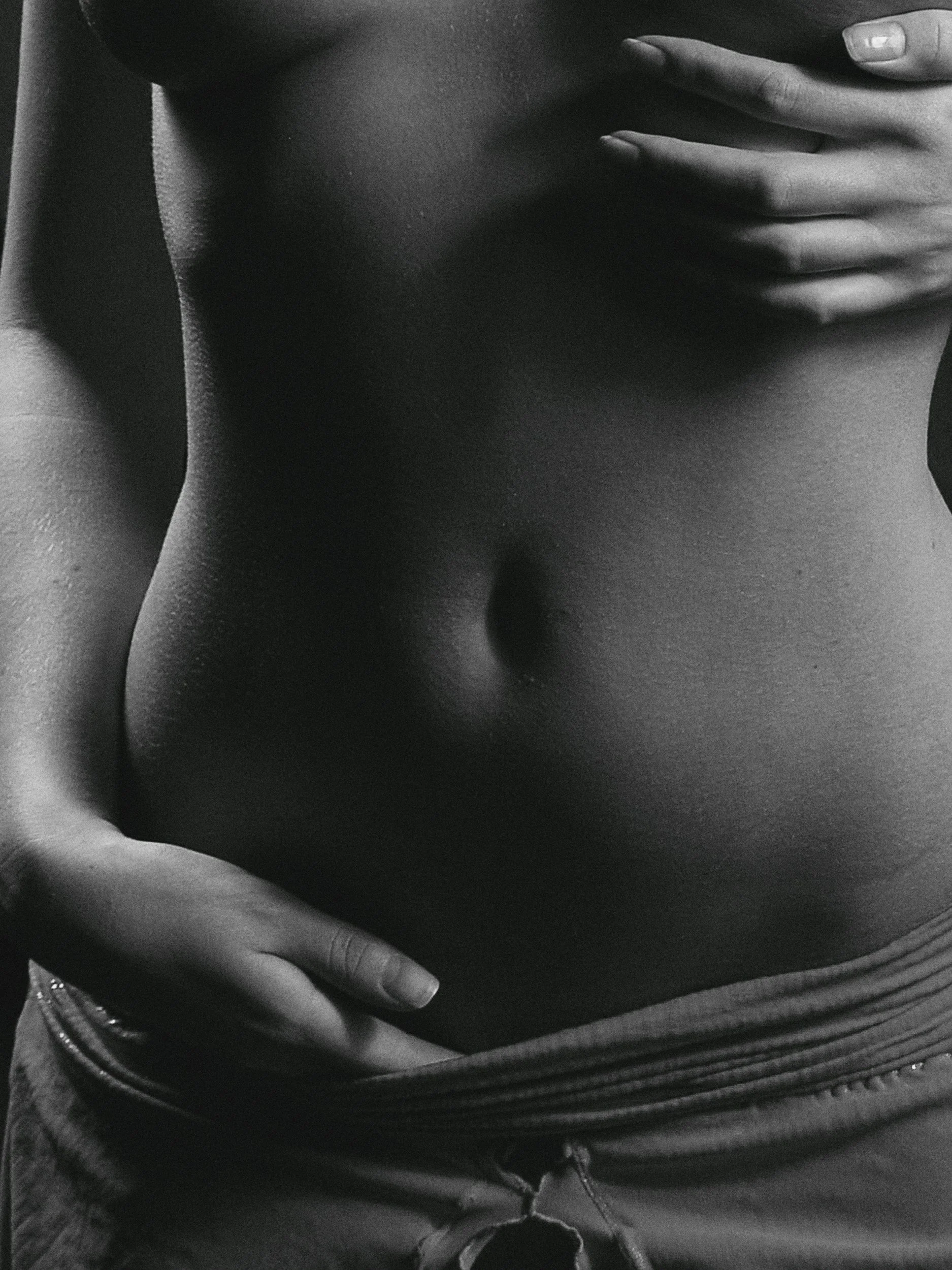
Chi Nei Tsang

1–3 sessions · return when needed
Abdominal work that goes deep quickly, engaging the organs and connective tissues of the belly directly. The body responds fast, in a few sessions, significant stagnation can shift. You return when something accumulates again, not on a fixed schedule.
Often chosen when tension, discomfort, or disconnection is felt in the abdominal area, or when digestion and breath feel congested.
“The gut is a second brain — sensing, processing, responding, remembering.”
— Michael Gershon
Origins
Originating within Daoist traditions, Chi Nei Tsang developed as a way to support the free circulation of qi through the organs.
In this view, physical tension, emotional holding, and energetic stagnation are not separate phenomena, but different expressions of the same imbalance.
What this work may support
This work may support the release of deeply held tension in the abdominal area and foster a clearer, more sensitive relationship with the internal organs; as organs regain space and mobility, flow may gradually reestablish, and related functions, such as digestion, elimination, and breathing may benefit from increased fluidity.
Effects are not imposed or predetermined, but may emerge over time; Chi Nei Tsang is not an outcome-oriented practice, experiences vary from person to person and from session to session.
That said, this work may support the release of held emotions and chronic stress patterns, a softening of muscular tension with gradual effects on posture, and improved circulation and functional balance within the abdominal system.
Many people notice greater mobility of the diaphragm , which, as it moves more freely, naturally influences the organs it sits above; effects are not predetermined, they emerge over time and vary from person to person.
The Practice
Touch is precise, attentive, and gradual.
The work supports the organs in releasing holding patterns, improving circulation, and restoring functional relationships between systems.
Many people experience not only physical relief, but a clearer sense of internal orientation and emotional regulation.
How sessions are held
Sessions emphasize listening over intervention.
Pressure is applied carefully, in dialogue with breath and sensation, allowing the body to respond without force. The pace is intentionally slow, supporting integration rather than catharsis.
The work may feel intense, both in terms of physical sensation and internal perception. Listening and regulation take precedence over any impulse to intervene.
Considerations
This work may be appropriate if you are open to a slow, attentive, and process-oriented approach to the abdominal area.
It may not be appropriate for those who find it difficult to stay present with intense physical sensation or emotional states, for those seeking quick results or symptom-focused treatment, or for those who are not yet ready to work with the body at this level of depth and directness.
Practical details
Sessions are offered one-on-one, in person. Specific preparation guidelines apply and are available on a dedicated page.
Your Questions, Answered
-
The session begins with a conversation: to understand what you are carrying, where you feel it in the body, and what has been present recently; this takes place at the start of the session itself, not in a separate meeting.
The work then moves directly into the abdomen: touch is precise and gradual, applied in dialogue with your breath and the response of the tissue, never by force; the pace is intentionally slow.
You may feel physical intensity, internal movement, or emotional resonance as the work proceeds; this is normal and expected.
Sessions are held in silence, there is no guidance during the treatment itself. If something becomes genuinely unbearable, you can say so, otherwise the work asks only that you stay present with what arises; questions belong before and after.
-
Before booking, a pre-session dialogue is required: a brief conversation to clarify the work, address any questions, and assess whether this approach is appropriate at this time; this needs to take place at least one week before the session.
Please get in touch to arrange a time for this dialogue; once it has taken place, you will receive the preparation guidelines and can book your session. -
After a CNT session, the most common experience is a sense of internal spaciousness: organs feeling more settled, breath moving more freely, the abdomen less contracted.
For those working with specific conditions (digestive irregularity, menstrual discomfort, pelvic heaviness), these may begin to shift in the days and months that follow, as circulation improves and the body finds a more natural functional rhythm.
The work does not stop when the session ends: with regularity over time, the adjustments begun in a session deepen and consolidate.
What begins as a noticeable shift after one or two sessions can become a sustained return to balance in digestion, menstrual regularity, pelvic tone, and overall vitality.
Some people feel tired or emotional after a session, both are normal; it is worth keeping the hours after a session relatively undemanding if possible.
Following the dietary and movement guidelines in the days after supports integration.
Read the after-session guidelines →
-
Chi Nei Tsang sessions are 50 minutes.
A combined Chi Nei Tsang and Karsai Nei Tsang session is 70 minutes.
-
You will be partially clothed throughout, comfortable clothing that allows easy access to the abdomen is ideal.
You will be informed of what to expect before you arrive.
-
This work is not a medical treatment and does not replace medical care.
Certain conditions require a conversation before booking: including pregnancy, active cancer treatment, IUD, hernia, or conditions affecting blood pressure or digestion.
The pre-session dialogue is the right moment to raise anything relevant.
Full preparation guidelines, including contraindications and what to avoid before a session, are available on the dedicated preparation page.
Read the full preparation guidelines → CNT/KNT
-
Sessions are best avoided during menstruation; the optimal timing is approximately 7 days before or after your period: when the body is neither in preparation nor in active release.
If you are unsure where you are in your cycle, feel free to reach out before booking.
-
This work may be relevant if you carry something specific in the abdomen that hasn't responded to other approaches.
Chi Nei Tsang tends to be particularly relevant for digestive irregularity, constipation, bloating and elimination difficulties, abdominal tension, irregular or painful menstrual cycles, and a sense of heaviness or congestion in the belly that doesn't shift.
It may also be relevant for conditions related to organ displacement: particularly a tilted or descended uterus and for concerns that arise later in life as a consequence of long-standing pelvic holding, including reduced libido, uterine prolapse, or incontinence.
These are areas the work addresses directly, through gradual, attentive contact with the abdominal and pelvic tissues.
One or two sessions can produce a significant shift, the change tends to continue in the weeks and months that follow, as the body finds its way back to a more natural rhythm.
"My digestion started working the way it hadn't in years, my cycle came back to regularity. I hadn't known until then what feeling balanced actually felt like."
— E., 41 · Milan · Chi Nei Tsang