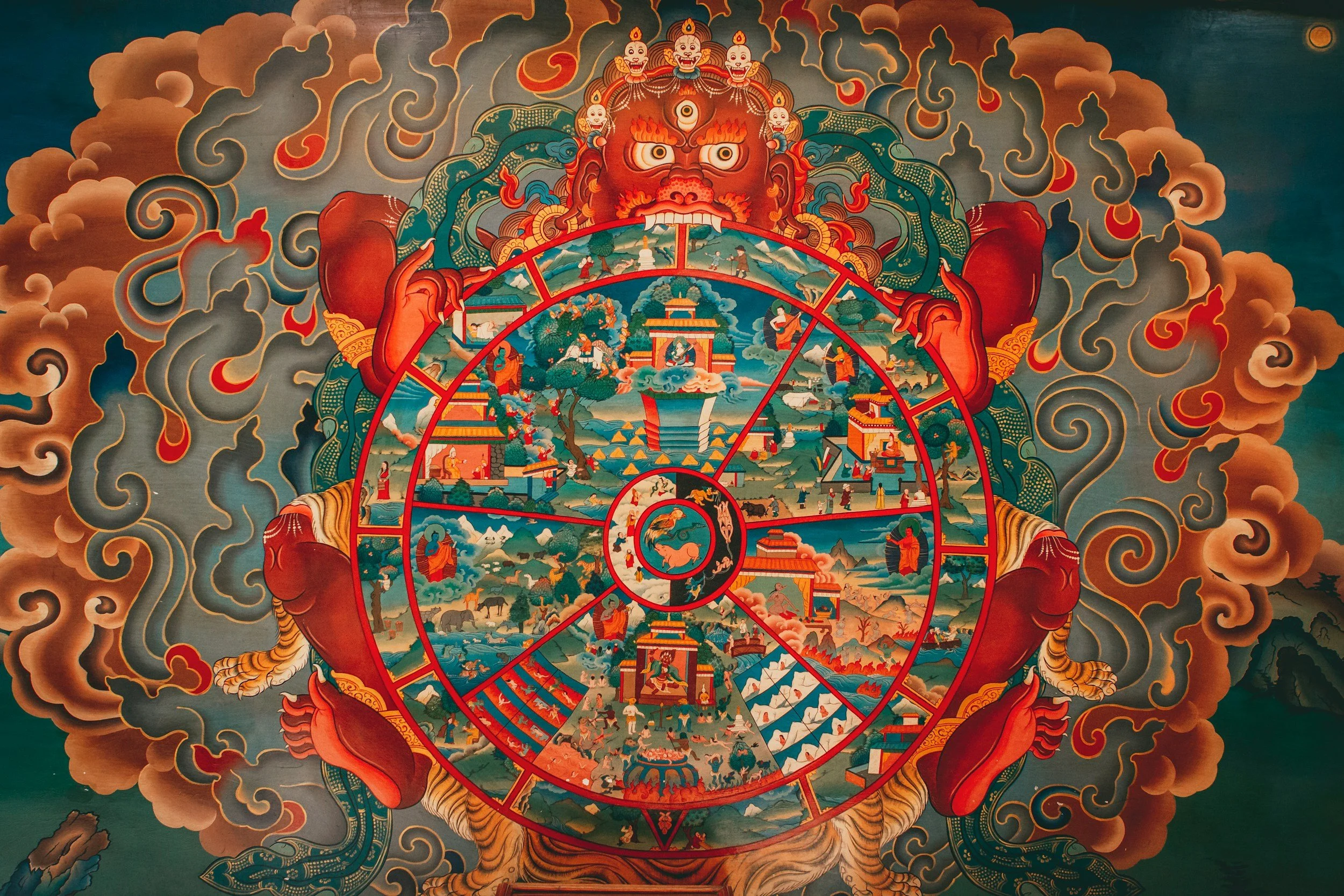
How the Mind Creates Its Own Suffering
Suffering doesn't always come from outside, much of it we construct ourselves, not intentionally, but systematically, through the way the mind relates to experience.
It isn't about positive or negative thinking, it goes deeper than that. The mind has a structural tendency: it moves toward what it perceives as pleasant and pulls away from what it perceives as unpleasant; this seems obvious, even reasonable. But it's precisely in this automatic movement, this constant contraction toward and away from experience, that most ordinary suffering takes root.
When something unpleasant happens, the mind doesn't simply register it: it judges it, resists it, tries to explain it, change it, prevent it from happening again. In doing so, it adds layer upon layer of mental activity on top of the original experience; it isn't the experience itself that becomes unbearable, it's the resistance to it, it's the story we tell ourselves about it.
The problem is that this mechanism is almost entirely automatic, we don't decide to react this way, we simply do, before we even notice it's happening; which is why meditation practice doesn't begin with trying to change our thoughts, but with learning to observe them to see the mechanism in motion, without being immediately carried away by it.
This doesn't eliminate suffering, but it changes the relationship to it, and that's a great place to start.